If you wake up at 2 a.m. damp, throw off the covers, then pull them back five minutes later because you’ve gone cold, you already know night sweats aren’t really about temperature alone. They’re about trapped heat and wet fabric sitting against your skin. The right bedding can’t rewrite your hormones, but it can change what happens to all that moisture, and that’s the difference between a brief stir and a wide-awake, sheet-changing wakeup.
Why night sweats disrupt sleep
Your core temperature naturally drops as you fall asleep and stays low through the night. Night sweats and hot flashes interrupt that by dumping heat fast. The sweat itself is the body’s cooling mechanism, but it only works if the moisture can evaporate. When it can’t, because the fabric around you holds it, you get the worst of both worlds: you’re hot during the flash and clammy afterward.
Two things make this worse than it needs to be:
- Fabric that holds water against your skin. Once a sheet is saturated, it stops absorbing and starts feeling cold and wet. That cold-wet sensation is a powerful wake signal.
- A heat trap above you. A heavy, synthetic-filled comforter reflects body heat and blocks airflow, so the warmth you’re trying to shed has nowhere to go.
For people in perimenopause and menopause, these flashes can come several times a night, so the recovery speed between them matters as much as the peak. The faster your bedding clears moisture, the faster you settle back down.
How bamboo lyocell wicks moisture
Not all “bamboo” fabric is the same, and the processing matters more than the plant. Quality bamboo bedding is made from bamboo lyocell — bamboo cellulose spun into long, smooth fibers. The property that helps night sweats is moisture regain: how much moisture a fiber can absorb relative to its weight.
- Bamboo lyocell sits around 12-13% moisture regain.
- Cotton sits around 6-9%.
In plain terms, bamboo lyocell can take on roughly twice the moisture of cotton before it feels wet. It pulls perspiration off your skin into the fiber, then releases it into the air as you and the room dry it out. The fiber surface is also exceptionally smooth, which is why a bamboo sheet set feels cool to the touch even before you’ve done anything — there’s less friction and better contact with the air.
This is also why bamboo doesn’t get that swampy, stuck-to-you feeling synthetics can. Absorb-and-release beats trap-and-hold when your body is cycling through sweat several times a night.
Bamboo vs cotton vs moisture-wicking synthetics
It helps to be honest about what each material actually does, because “cooling” gets slapped on everything.
| Property | Bamboo lyocell | Cotton (percale/sateen) | Moisture-wicking polyester |
|---|---|---|---|
| Moisture regain (absorption) | ~12-13% | ~6-9% | Under 1% |
| What it does with sweat | Absorbs into fiber, then releases | Absorbs, but saturates sooner | Moves along surface; absorbs almost none |
| Feel when damp | Stays drier longer | Turns cold and clingy when soaked | Can feel slick or clammy |
| Breathability | High | Moderate to high | Low to moderate |
| Odor over a full night | Resists | Neutral | Tends to hold odor |
| Surface feel | Smooth, cool-to-touch | Crisp or soft depending on weave | Often synthetic-slick |
The honest read: cotton is fine until it saturates, and good percale breathes well — but on a heavy-sweat night it gives up sooner. Polyester marketed as “moisture-wicking” genuinely moves surface moisture, which is why it’s popular in gym shirts, but it absorbs almost nothing and traps heat over eight hours in bed. Bamboo lyocell is the one that both absorbs a real volume of sweat and breathes, which is the combination night sweats demand.
Building a full cooling sleep system
Sheets are the layer touching your skin, so they’re the highest-leverage piece — but they can’t fix a bed that’s working against them. Think in layers:
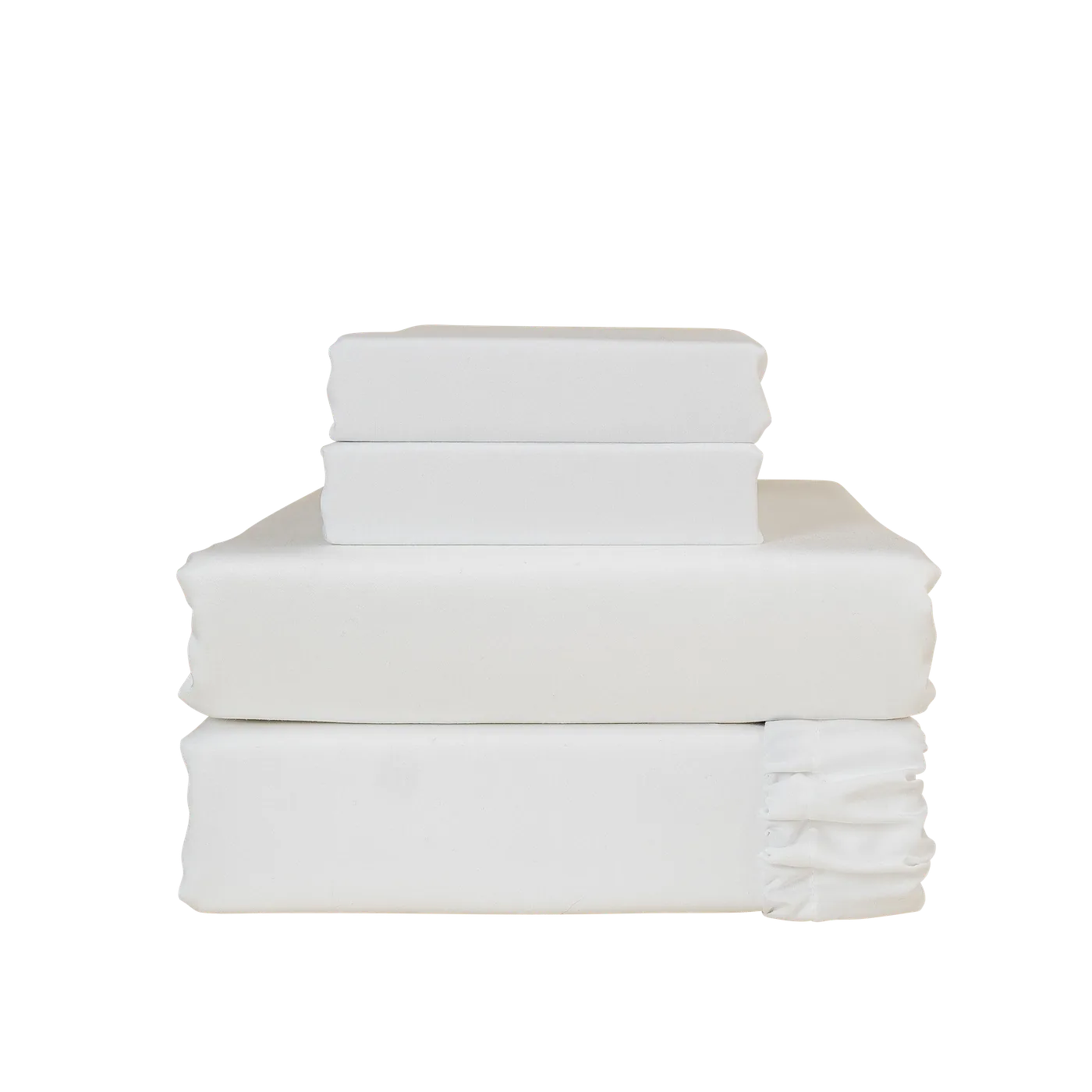
- Sheets (skin contact): bamboo lyocell, moderate thread count, single fiber rather than a blend.
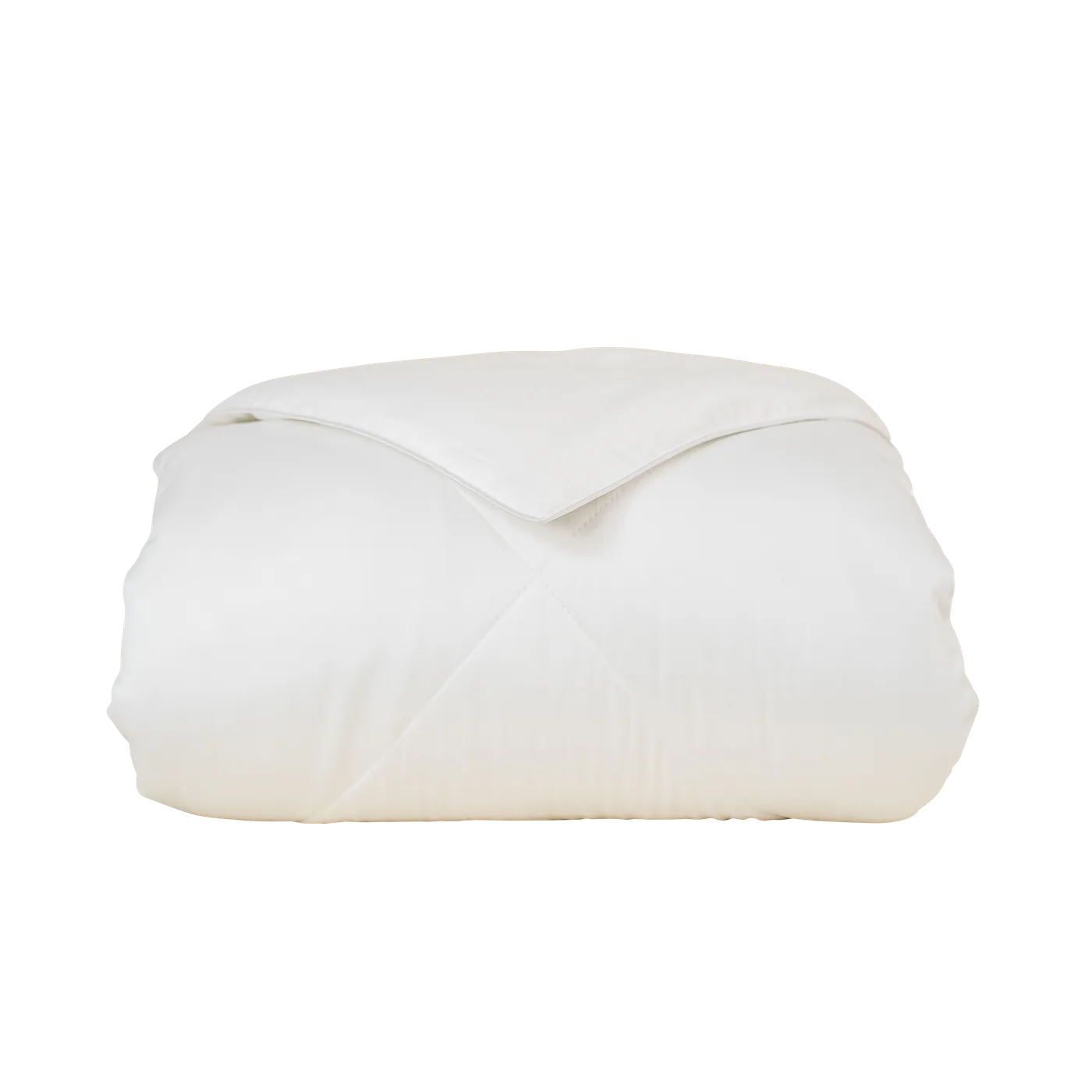
- The layer above you (heat escape): a breathable insert. A heavy comforter undoes good sheets by trapping the warmth your sheets are releasing. A lighter bamboo duvet insert lets heat and moisture pass through instead of reflecting it back.
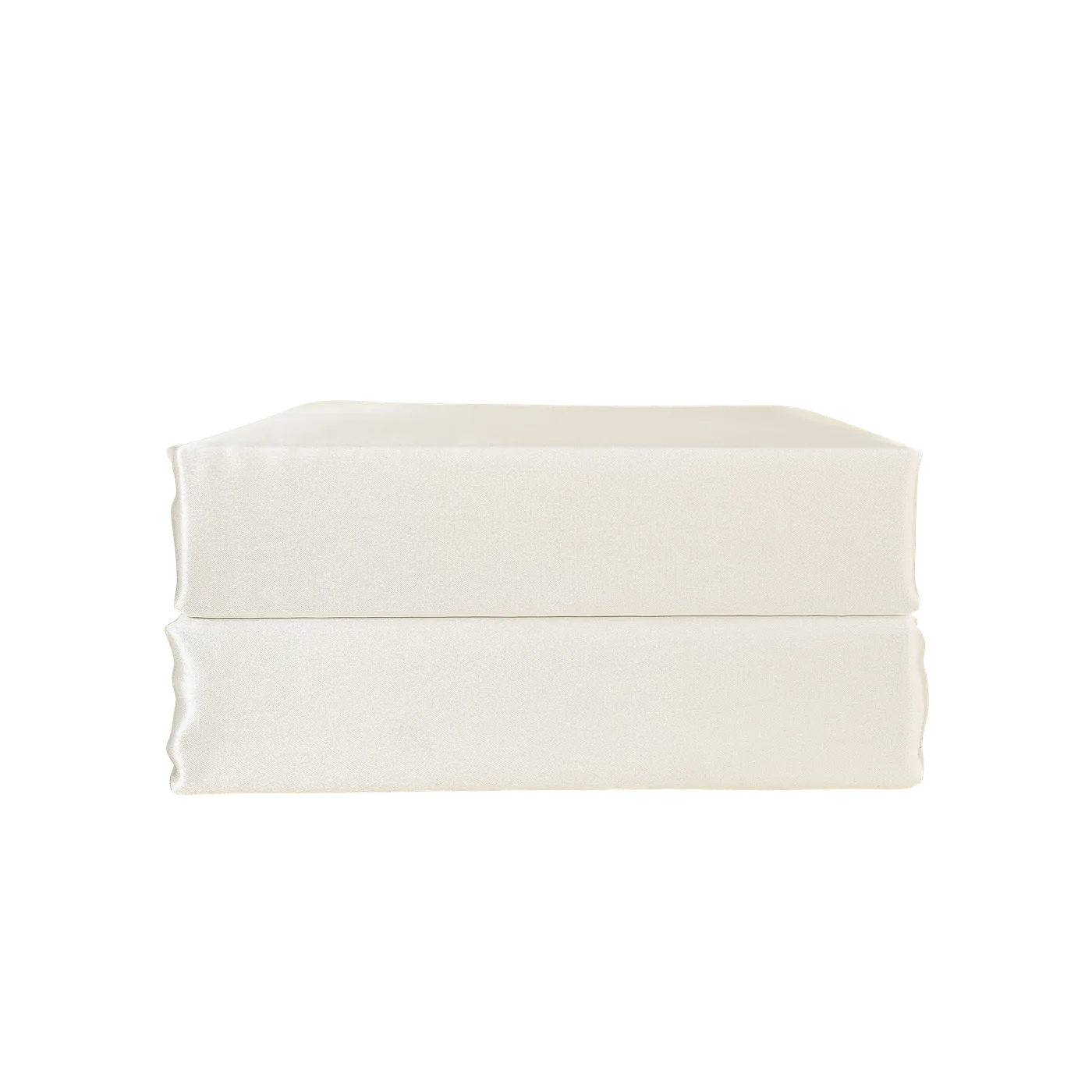
- Pillow surface (where your head and neck heat up): your face and scalp run hot, and a damp pillow is its own wake trigger. Smooth, breathable silk pillow shams stay cooler against your cheek than a saturated cotton case.
You can mix and match by season — and if you want to set the whole bed up at once, our bundles pair sheets and inserts that are meant to work together.
Bedroom and habit tips that stack with bedding
Bedding does the heavy lifting, but a few free or cheap changes compound the effect:
- Room temperature 65-68°F. A cooler room gives your released body heat somewhere to go.
- Airflow. A quiet fan or cracked window keeps the air around you moving so the moisture bamboo releases can actually evaporate.
- Watch the evening triggers. Alcohol, spicy food, and heavy late meals are common night-sweat amplifiers. So is caffeine too late in the day.
- Loose, natural-fiber sleepwear — or less of it. Synthetic pajamas trap heat the same way a synthetic sheet would.
- A glass of cool water within reach so a flash doesn’t turn into a full wakeup and a trip to the kitchen.
None of these replace good bedding, but together they shorten the time it takes to settle after a flash.
Care to keep wicking performance
Bamboo lyocell’s moisture performance is built into the fiber, so it doesn’t “wear off” — but laundry residue can dull it. Two culprits coat the fibers and reduce how fast they absorb and release moisture:
- Fabric softener. It leaves a waxy film that literally blocks the fiber’s ability to take on moisture. Skip it entirely.
- Too much detergent. Excess soap doesn’t fully rinse out and builds up over time.
Keep it simple: a small amount of mild detergent, a cool or warm (not hot) wash, no softener, and either a low-heat tumble or a line dry. Done this way, the sheets keep wicking exactly as well in year three as in week one. Friction and harsh washing are also the real causes of pilling, not the fiber itself — so gentle care protects both the feel and the performance.
Our recommendations for night-sweat sufferers
If you’re buying for night sweats specifically, here’s how we’d prioritize:
- Start with the sheets. A 100% bamboo lyocell bamboo sheet set is the single change that touches your skin all night. If you only do one thing, do this.
- Lighten the layer on top. Swap a heavy comforter for a breathable bamboo duvet insert so the heat your sheets release can actually escape.
- Cool the pillow. Add silk pillow shams for the spot where your head and neck overheat.
- Try it for real. Night-sweat comfort is personal, so use the 30-night trial to judge it across a full sleep cycle, not one nap.
Compare full setups on our products page or weigh materials side by side on the comparison page.
Key takeaways
- Night sweats wake you through wet fabric and trapped heat, not temperature alone — so manage moisture and airflow, not just “cooling.”
- Bamboo lyocell absorbs roughly twice the moisture of cotton (~12-13% vs ~6-9% regain) and releases it quickly, so the fabric against your skin stays drier.
- Polyester “moisture-wicking” sheets move surface moisture but absorb almost none and trap heat over a full night; bamboo both absorbs and breathes.
- Bamboo sheets won’t stop hormonal hot flashes, but they shorten the clammy recovery between them — which is where most of the lost sleep actually happens.
- Treat the bed as a system: bamboo sheets for skin contact, a breathable insert so heat escapes, and a cool pillow surface.
- Skip fabric softener and heavy detergent — residue coats the fiber and slows its wicking; gentle care keeps performance like-new.