“Bamboo” has become one of the most trusted words in textiles — and one of the least informative. It conjures a fast-growing, low-water plant, and that part is true. But the bamboo stalk has to be turned into a soft, drapeable fiber, and that process is where safety and sustainability are actually decided. The plant is the easy part. The chemistry is the part worth understanding.
How bamboo becomes fabric (viscose vs lyocell)
Bamboo is rigid. To make it into something you’d want against your skin, the cellulose has to be dissolved into a liquid, then re-formed into long fibers. There are two main routes, and they differ mainly in the solvent and how it’s handled.
- Viscose (rayon): Bamboo cellulose is dissolved using chemicals, then regenerated into fiber. This is the older, most common route. Done in an open-loop system, the solvents can be released into the environment if not controlled.
- Lyocell: A more modern process that uses a different solvent in a closed-loop system, where the solvent is captured and reused rather than discharged. Most bamboo bedding sold as “lyocell” follows this route.
Crucially, in both cases the chemicals are part of manufacturing — they’re washed out of the finished fiber. The yarn you sleep on doesn’t carry the processing solvent. So the difference between viscose and lyocell isn’t really about whether the final sheet is “chemical-laden.” It’s about what happened to those chemicals during production, and whether anyone verified the finished textile afterward.
The real sustainability concern with viscose
Let’s be candid, because overclaiming is exactly what muddies this category. The genuine concern with bamboo viscose isn’t your bedsheet — it’s the factory.
In a poorly controlled, open-loop viscose process, the solvents used to dissolve cellulose can be released as wastewater and emissions. That’s a real environmental and worker-safety issue, and it’s why “bamboo viscose” sometimes gets criticized in sustainability circles. The criticism is fair when it’s aimed at unregulated open-loop production.
What it is not is a reason to think your finished, certified sheet is dosing you with chemicals overnight. Two separate questions get tangled here:
- Is the finished fabric safe to use? (A product-safety question — answered by certification.)
- Was the manufacturing environmentally responsible? (A process question — answered by closed-loop systems.)
You need both answered to make a confident claim, and the honest brands answer them separately instead of blurring them into a vague “eco” badge.
What closed-loop processing changes
Closed-loop is the single most important word in this whole conversation, and it’s worth understanding why.
In a closed-loop system, the solvent used to dissolve the bamboo cellulose is captured and recycled back into the process instead of being discharged. Recovery rates in well-run closed-loop production are very high. That directly addresses the open-loop concern: far less solvent escapes into water or air.
| Question | “100% bamboo” alone | Closed-loop + certified |
|---|---|---|
| Tells you the raw material is bamboo | Yes | Yes |
| Tells you the solvent was recaptured | No | Yes (closed-loop) |
| Tells you the finished fabric was safety-tested | No | Yes (certification) |
| Verifiable by a third party | No | Yes |
| Supports a real sustainability claim | No | Much stronger |
This is the core takeaway of the whole article: the processing and the certification matter more than the word “bamboo.” A closed-loop, certified product is genuinely better than an unverified one wearing the same plant name.
What OEKO-TEX Standard 100 certifies (and doesn’t)
OEKO-TEX Standard 100 is the certification you’ll see most often, and it’s worth knowing exactly what it promises — because it’s frequently overstated.
What it certifies: the finished textile has been laboratory-tested against a long list of harmful substances and stays within strict limits. That covers residual chemicals, certain heavy metals, restricted dyes, and other substances that could irritate skin or pose a health risk. In other words, it’s a product-safety guarantee for the thing that touches your skin.
What it does not certify:
- It does not mean the fabric is “organic.”
- It does not by itself certify that the manufacturing was environmentally sustainable.
- It does not describe the farming or the carbon footprint.
So OEKO-TEX Standard 100 is a strong, meaningful safety signal — and exactly the right thing to look for when your question is “is this safe against my skin.” It’s just not a sustainability or organic claim, and any brand implying otherwise is stretching it.
Is finished bamboo fabric safe on skin?
Yes. Finished, certified bamboo lyocell is safe on skin — including sensitive, eczema-prone skin and babies. Two reasons:
- The processing chemicals are washed out during manufacturing; they aren’t a residue you sleep in.
- Certification verifies it. An OEKO-TEX Standard 100 mark means the finished fabric was tested and found within safe limits for harmful substances.
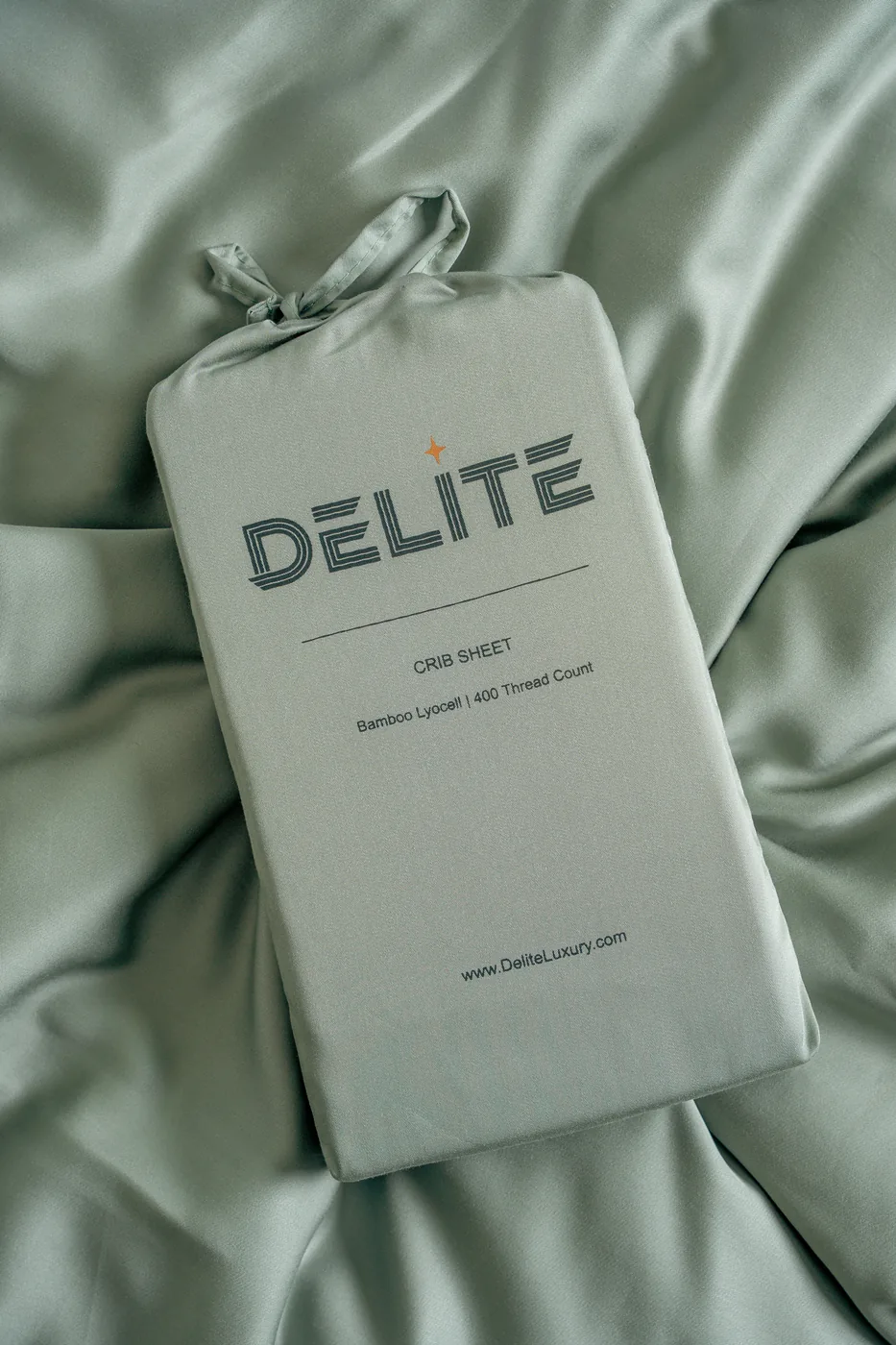
On top of safety, bamboo lyocell is genuinely gentle: the fiber is smooth and breathable, with low friction against skin and good moisture management. That combination — verified-safe plus physically gentle — is why it’s a popular choice for nurseries and sensitive sleepers. A certified bamboo crib sheet is a reasonable pick precisely because the safety question has a documented answer.
How to verify a brand’s claims
Marketing leans hard on “natural” and “eco” because those words are unregulated. Here’s how to cut through it:
- Demand a named certification. “OEKO-TEX Standard 100” with the ability to look it up beats a generic green leaf icon every time.
- Look for process language. “Closed-loop” or “lyocell” tells you the solvent was likely recaptured. Silence on process is a yellow flag.
- Watch for category confusion. A brand that calls a safety certification “proof of sustainability,” or calls bamboo “organic” with no organic certification, is conflating things — be skeptical.
- Check the fiber, not just the plant. “100% bamboo lyocell” is more informative than “bamboo.”
- See if the claims are separated honestly. Trustworthy brands state safety and sustainability as two distinct, evidenced points.
If a product can’t survive this checklist, the word “bamboo” on its own isn’t doing the work the marketing implies.
Why Delite chooses OEKO-TEX certified bamboo lyocell
Our position is deliberately specific rather than buzzword-heavy:
- We use bamboo lyocell, produced via a closed-loop process so the solvent is recaptured rather than discharged — that’s the environmental half of the answer.
- It’s OEKO-TEX Standard 100 certified, so the finished fabric is independently tested free of many harmful substances — that’s the skin-safety half.
- We’re candid about what each claim means: the certification is a safety guarantee, and the closed-loop process is the sustainability story. We don’t fold one into the other or stamp “organic” where it doesn’t apply.
That honesty is the whole point — you can verify both claims, and you know which question each one answers. Browse the certified line on our products page, or read the deeper material breakdown on our comparison page and our bundles if you want to outfit a full bed.
Key takeaways
- “Bamboo” describes the raw material only — it tells you nothing about whether the fabric is safe or sustainable. Processing and certification do.
- The chemicals used to turn bamboo into fiber are washed out of the finished fabric; the genuine concern is environmental release during open-loop manufacturing.
- Closed-loop processing recaptures and reuses the solvent, addressing the main sustainability concern with viscose; lyocell is typically closed-loop.
- OEKO-TEX Standard 100 certifies the finished textile is tested free of many harmful substances — a safety guarantee, not an organic or sustainability claim.
- Finished, certified bamboo lyocell is safe on skin, including for babies and eczema-prone sleepers, because it’s both verified-safe and physically gentle.
- To verify a brand: demand a named certification, look for closed-loop or lyocell language, and be wary of anyone conflating safety with sustainability.