If you’ve shopped for silk bedding, you’ve seen the same two badges over and over: “6A grade” and “22 momme.” They sound like marketing, and plenty of brands treat them that way. But they’re real specifications that measure two completely different things — and once you understand both, you can tell genuine quality from a polyester pillowcase with a silk-sounding name.
What “mulberry silk” means
Mulberry silk is the silk produced by Bombyx mori silkworms raised exclusively on mulberry leaves. That controlled diet is the whole point: it produces a remarkably consistent, smooth, round filament that’s finer and more uniform than wild or mixed-feed silks. The result is the long, lustrous fiber that most people picture when they think of luxury silk.
Not all silk is mulberry silk. Tussah and other wild silks come from moths that eat varied leaves, producing shorter, coarser, more irregular fibers in tan or brown tones. Those have their place, but for bedding — where you want smoothness against skin and hair, plus a clean white or dyed finish — mulberry silk is the standard. When a label says “100% mulberry silk,” it’s telling you the fiber source. It is not, on its own, telling you how good that silk is. That’s where grade comes in.
Silk grading explained (why 6A is top tier)
Long-filament mulberry silk is graded on a letter-and-number scale that tops out at 6A. The grade reflects the physical quality of the raw silk threads, judged on things like:
- Filament length — longer, continuous filaments mean stronger, smoother fabric with fewer joins.
- Uniformity — consistent thickness along the thread produces an even, snag-resistant weave.
- Cleanliness — fewer neps, knots, and defects in the reeled silk.
- Color and luster — a clean, even base tone that takes dye well and reflects light softly.
6A represents the top of that scale — the longest, cleanest, most uniform filaments, generally drawn from roughly the top tier of cocoons (often described as around the top ~5%). Lower grades (down through the A, 2A, 3A range and below) have shorter filaments, more variation, and more flaws, which is why they cost less and don’t wear as nicely. Grade is fundamentally a quality measure. It tells you how good the raw fiber was before it was ever woven. It does not tell you how heavy or substantial the finished fabric feels — and that’s the most common point of confusion.
What momme measures (weight/density)
Momme (written “mm,” pronounced “mommy”) is a traditional unit for the weight and density of silk fabric. It’s measured against a fixed standard area and length of fabric: the higher the momme number, the more silk is packed into the same space, and the heavier and denser the cloth.
A rough sense of the scale for silk bedding and apparel:
| Momme (mm) | Typical use | Feel |
|---|---|---|
| 12–16 | Lightweight scarves, linings | Thin, sheer, drapes loosely |
| 16–19 | Budget “silk” pillowcases, light apparel | Light, can feel flimsy in daily use |
| 19–22 | Quality pillowcases and sheets | Substantial, smooth, durable |
| 22–25 | Premium luxury bedding | Dense, weighty, long-wearing |
| 25+ | Heavy specialty fabrics | Very heavy, stiffer drape, costly |
Momme is purely a weight/density spec. A thin, low-grade silk and a beautiful 6A silk could theoretically be woven to the same momme — momme alone won’t tell you which is which. That’s exactly why you need to read grade and momme together.
Why 22-momme is the sweet spot for bedding
For sheets and pillowcases that you sleep on every night, weight matters more than it does for a scarf. Too light and the fabric feels insubstantial, snags easily, and wears thin within a year or two. Too heavy and it becomes expensive, warm, and stiffer than most people want against their skin.
22-momme lands in the luxury sweet spot for a few practical reasons:
- Durability — a denser weave resists snags, pulls, and thinning, so it survives regular washing and use far better than 16 to 19-momme silk.
- Drape and feel — heavy enough to feel genuinely substantial and to lie smoothly against skin and hair, without the cardboard stiffness of very high momme.
- Breathability — still light and open enough to regulate temperature, wicking warmth away in summer and holding it in winter.
- Value — you get a meaningful durability upgrade over 19-momme without paying the steep premium of 25-momme-plus fabrics.
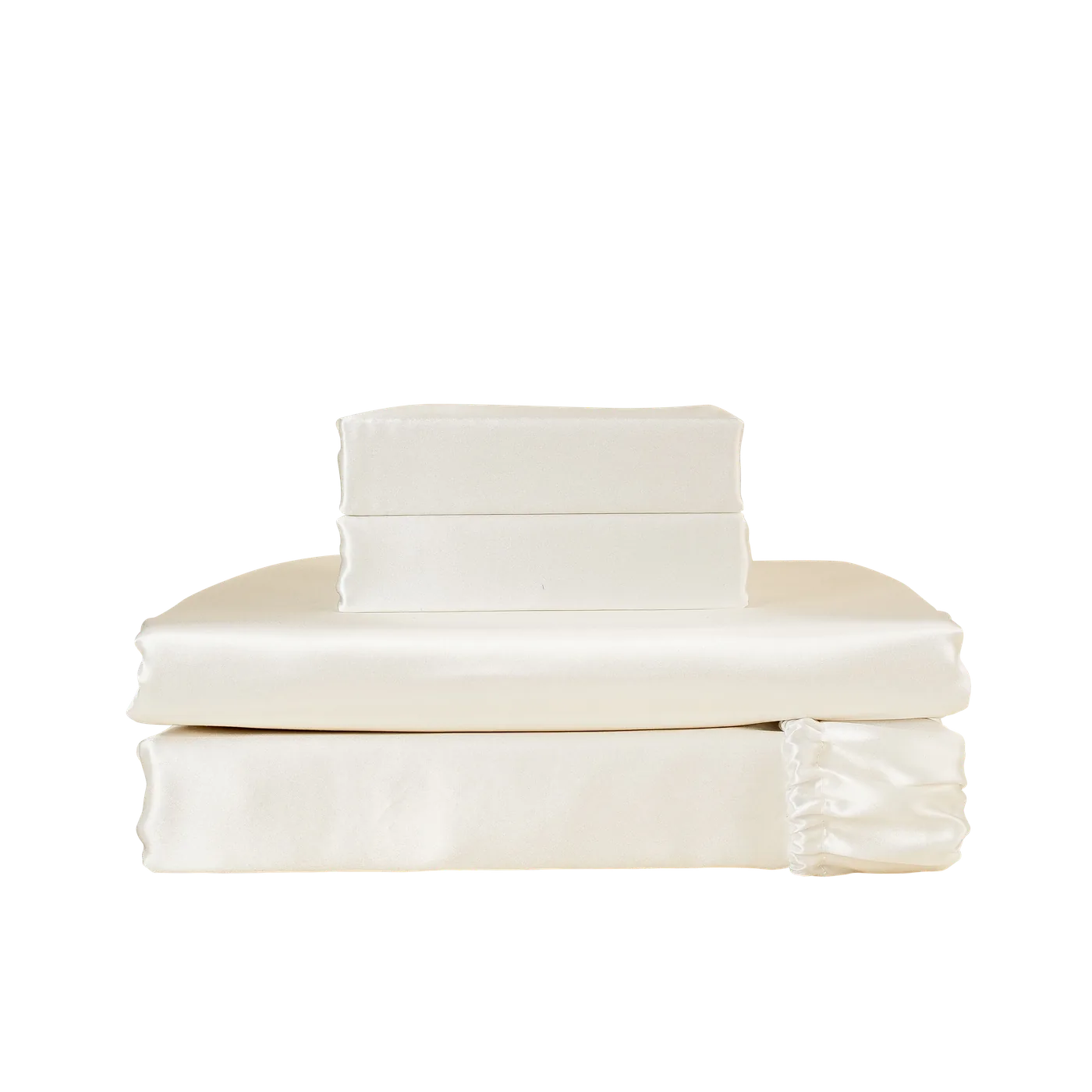
This is why 22-momme has become the benchmark for premium silk sheets and pillowcases, and it’s the weight we chose for our silk sheet set and silk pillow shams. It’s the point where durability, comfort, and value intersect for something you’ll touch every single night.
Grade vs momme — they measure different things
Here’s the single most useful idea in this entire guide: grade and momme are not interchangeable, and a serious silk product lists both.
| Grade (e.g. 6A) | Momme (e.g. 22) | |
|---|---|---|
| What it measures | Fiber quality | Fabric weight/density |
| Based on | Filament length, uniformity, cleanliness | Amount of silk per standard area |
| Higher number means | Better, longer, cleaner fiber | Heavier, denser, more durable fabric |
| Affects | Smoothness, luster, snag resistance | Substance, durability, warmth, cost |
| Tells you about durability? | Partly (fiber strength) | Partly (weave density) |
A brand that advertises only one number is telling you half the story. A “22-momme” pillowcase woven from low-grade short-filament silk will pill and snag. A “6A” pillowcase woven at a flimsy 16-momme will feel thin and wear out. Genuine quality is 6A grade AND a substantial momme — both the fiber and the fabric doing their jobs. That combination is what you should be looking for, and what you should expect any honest silk brand to disclose.
Spotting fake or mislabeled silk
The silk aisle is full of misleading labels. The biggest trap is the word satin. Satin is a weave — a way of interlacing threads to create a smooth, shiny face — not a fiber. Most inexpensive “satin pillowcases” are woven from polyester, which is plastic. They can look glossy on a shelf, but they don’t breathe, don’t regulate temperature, and behave nothing like real silk. (We break this down in detail in our silk vs satin pillowcase guide.)
Here’s a practical checklist before you buy:
- Look for both grade and momme. A real silk product states the grade (ideally 6A) and the momme weight. Vague language like “luxury silky satin” is a red flag.
- Check for certification. An OEKO-TEX Standard 100 certification means the textile has been tested for harmful substances — a meaningful sign the brand takes its materials seriously.
- Feel the temperature. Real silk feels cool at first touch but quickly warms to your skin. Polyester satin stays slick and clammy and doesn’t regulate.
- Watch the sheen. Genuine silk has a soft, slightly irregular luster that shifts color in the light. A flat, mirror-like, plastic shine usually means synthetic.
- Mind the price. Real 6A 22-momme silk costs real money to make. A “silk” pillowcase at a fast-fashion price is almost certainly polyester.
What Delite’s 6A 22-momme silk means for you
When we list our silk as 6A grade, 22-momme mulberry silk, both numbers are doing work — and we mean them literally.
The 6A grade means the fiber is long-filament, uniform, and clean: the smoothness you feel against your face, the soft luster, and the resistance to pilling all trace back to fiber quality. The 22-momme weight means the fabric is dense and substantial enough to last through years of washing and nightly use, while staying breathable enough to regulate temperature. And our silk carries OEKO-TEX Standard 100 certification, so you know it’s been tested for harmful substances.
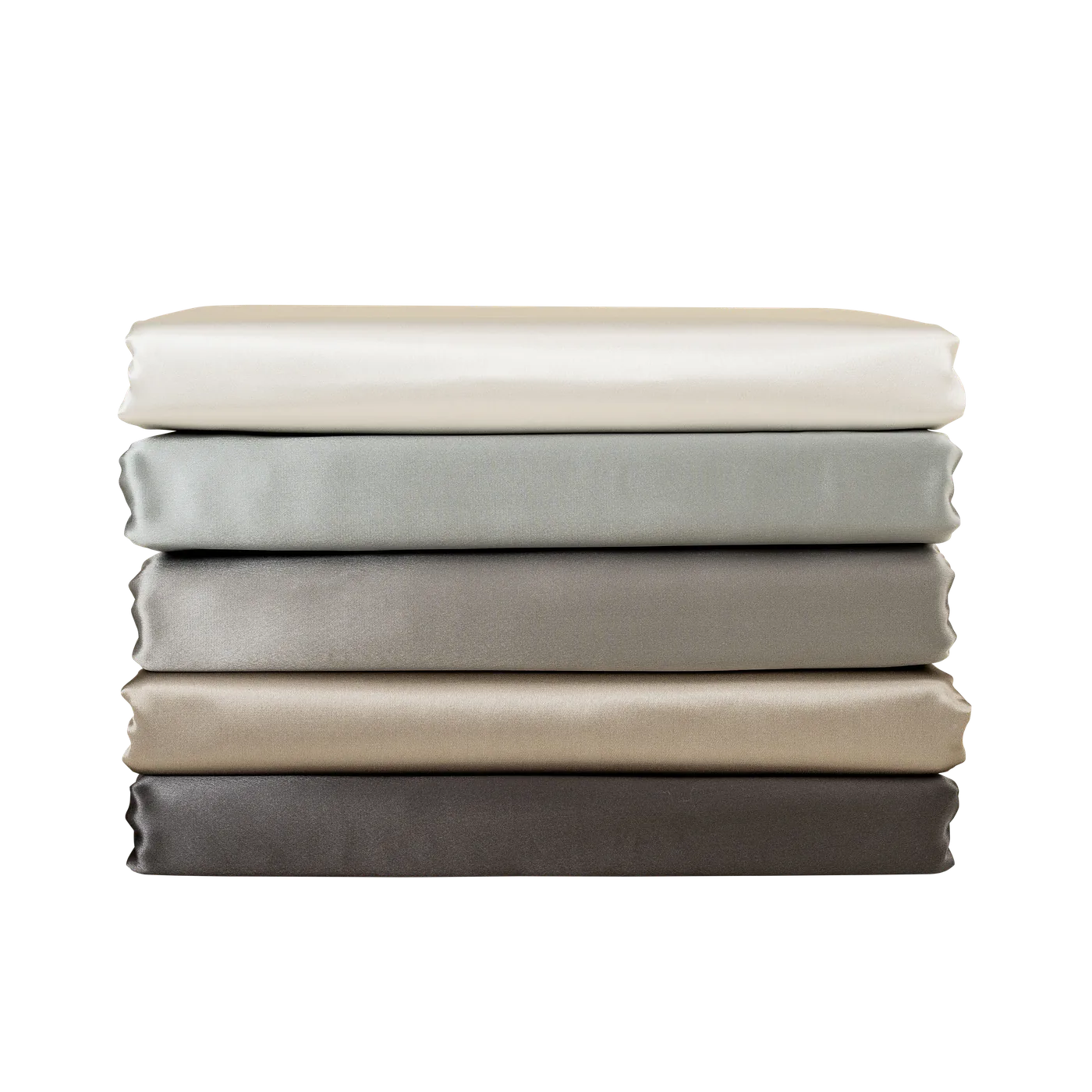
That combination — top-tier fiber and luxury-weight fabric, certified — is what separates bedding you’ll keep from a pillowcase you’ll replace next year. You can see the full range, including the silk duvet cover, on our products page, and if you’re weighing silk against our bamboo lyocell line, our comparison page lays out the differences side by side. Every Delite order ships direct with a 30-night trial, so you can feel the difference for yourself.
Key takeaways
- Mulberry silk names the fiber source (Bombyx mori silkworms fed only mulberry leaves) — smooth, uniform, and the standard for luxury bedding. It does not, by itself, indicate quality.
- 6A is the top of the standard fiber-quality grade scale: longest, cleanest, most uniform filaments, generally from the top tier of cocoons.
- Momme measures fabric weight and density. 22-momme is the durability-comfort-value sweet spot for sheets and pillowcases.
- Grade and momme measure different things — quality vs weight. A trustworthy product lists both; a single number tells half the story.
- “Satin” is a weave, not a fiber. Most cheap satin is polyester. Look for stated grade, stated momme, and certification to confirm real silk.
- Delite’s silk is 6A grade, 22-momme, OEKO-TEX Standard 100 certified — top-tier fiber and luxury weight, backed by a 30-night trial.