If you wake up at 3 a.m. throwing the covers off, the problem usually isn’t you — it’s your bedding. Cooling comes down to three things working together: the fiber, the weave, and how well the whole system moves moisture. Here’s how to build a bed that actually stays cool.
What makes a sheet “cooling”?
There’s no single cooling feature; there are three levers:
- Fiber determines how heat and moisture move. Smooth, high-moisture fibers like bamboo lyocell carry sweat away fast.
- Weave controls airflow and feel. A breathable sateen or crisp percale sleeps cooler than a dense, tightly packed weave.
- Density (thread count) matters in the middle, not the extremes. Too loose and it’s flimsy; too dense and airflow chokes off.
A cooling bed gets all three right. A “cooling” label slapped on a dense, sweat-holding fabric does not.
Why moisture-wicking beats raw breathability
Breathability — airflow through the fabric — gets all the marketing attention. But for most hot sleepers, the real culprit is humidity, not air. Sweat that lingers against your skin is what feels hot and sticky.
That’s why moisture-wicking is the more important property. A fiber that absorbs and releases moisture keeps the surface dry, so even when you sweat, the bed doesn’t feel wet. This is exactly where bamboo lyocell shines.
Bamboo lyocell for hot sleepers
Bamboo lyocell has a moisture regain of roughly 12–13%, compared with cotton’s 6–9%. In practical terms, it can soak up more sweat before it feels damp, then release it back into the air. Combine that with a smooth fiber that feels cool against skin, and you get a sheet that manages both temperature and moisture at once.
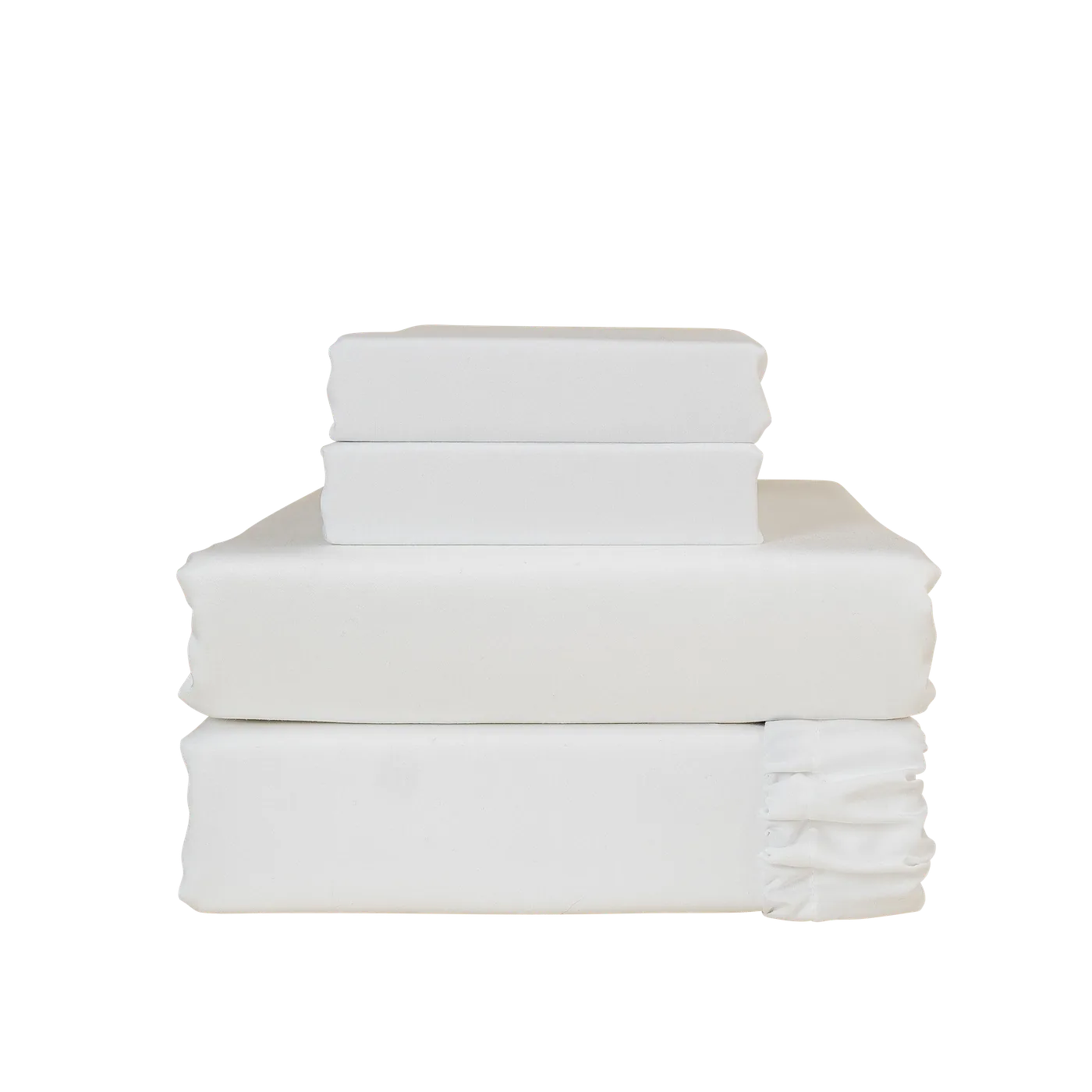
Our bamboo sheet set is a 300-thread-count bamboo lyocell certified to OEKO-TEX Standard 100, meaning the finished fabric was tested free of many harmful substances. For a deeper look at how bamboo compares to the cotton you’re probably sleeping on now, see our bamboo vs cotton breakdown.
| Cooling property | Bamboo lyocell | Cotton | Linen |
|---|---|---|---|
| Moisture regain | ~12–13% | ~6–9% | ~8–12% |
| Feel against skin | Silky, cool | Crisp to warm | Textured, dry |
| Stays dry when sweating | Excellent | Moderate | Good |
| First-night softness | High | Moderate | Low (softens over time) |
The role of thread count and weave
More thread count is not more cooling — a point the bedding industry rarely volunteers. Past a certain density, a fabric becomes so tightly packed that airflow drops and it actually sleeps warmer.
For bamboo, the sweet spot is roughly 250–350 thread count. Our sheets sit at 300TC, which balances a soft, substantial hand with enough openness to breathe. And because fiber quality and weave matter more than the raw number, a 300TC bamboo sateen genuinely rivals cotton sheets advertised at far higher counts.
Cooling beyond the sheets
Sheets are only part of the system. The covers and pillow surfaces matter just as much:
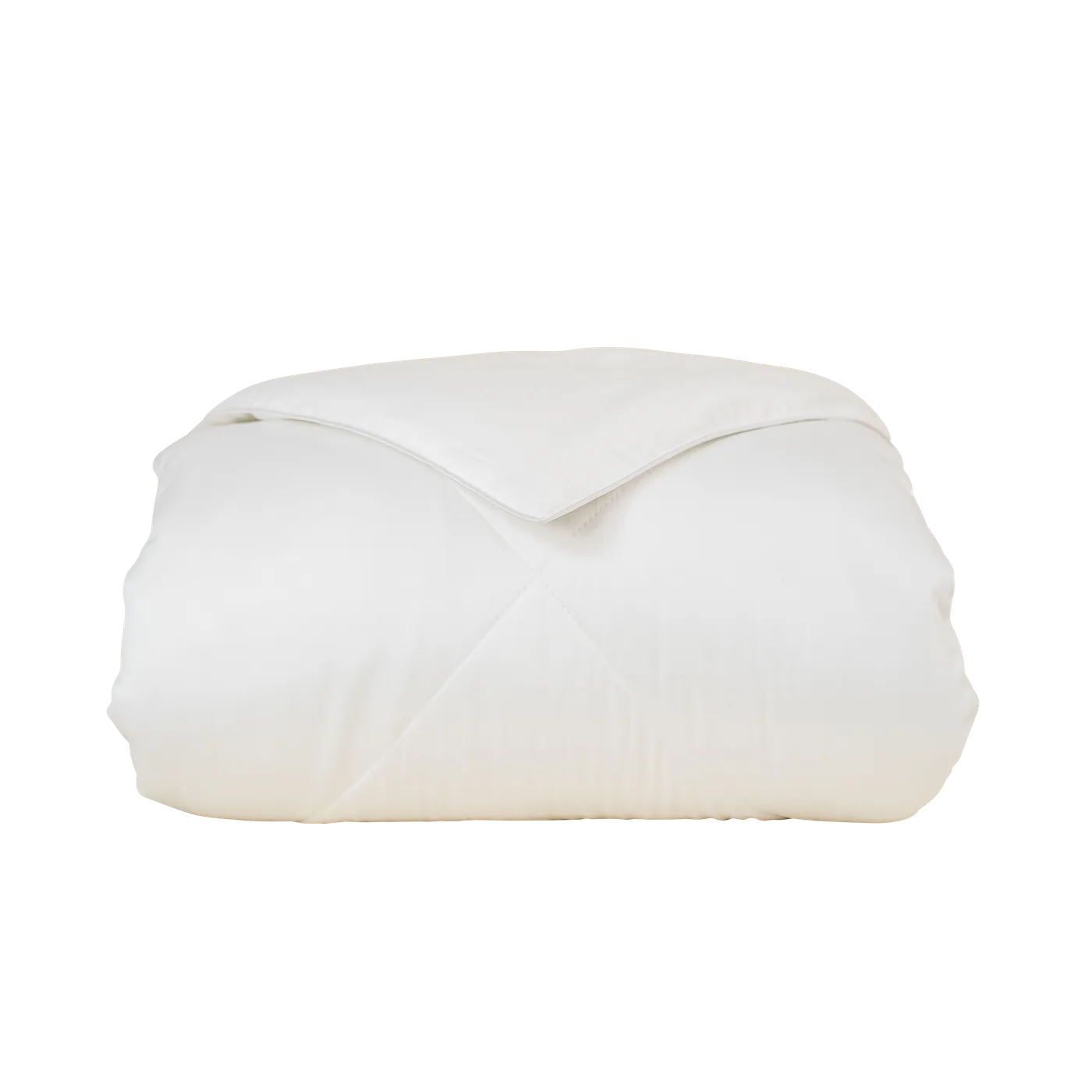
- Duvet insert. A lighter bamboo duvet insert lets body heat escape instead of trapping it. Hot sleepers should generally size down in fill weight.
- Duvet cover. A breathable bamboo duvet cover keeps the whole top layer wicking instead of insulating.
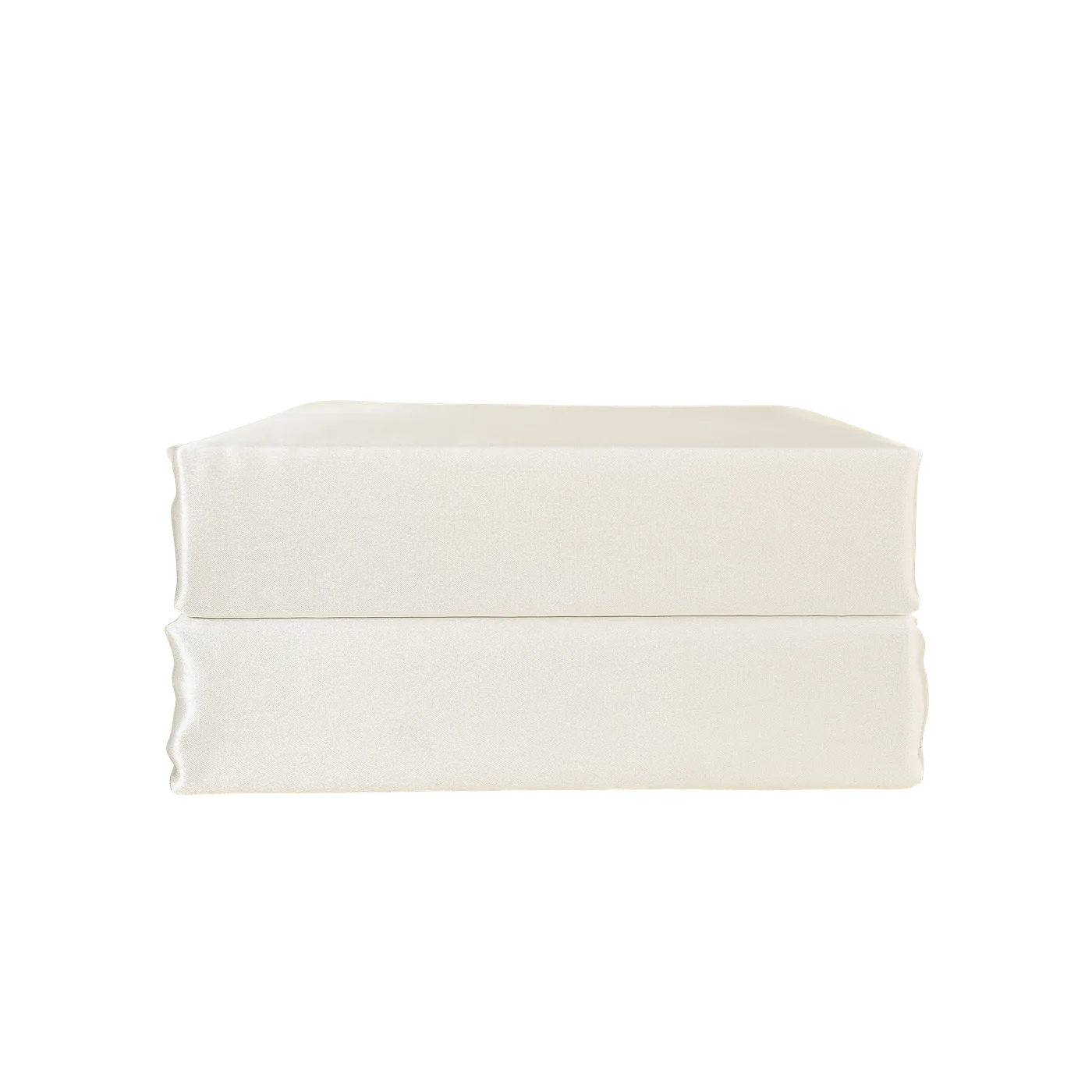
- Pillow surface. Your head and neck lose a lot of heat, so the pillowcase matters. Cool, smooth silk pillow shams — 22-momme Grade 6A mulberry silk — feel cool to the touch and reduce friction, a nice pairing with bamboo sheets below.
You can see how these pieces fit together on our bundles page.
Care tips that preserve coolness
Cooling performance degrades if you wash bamboo the wrong way. The biggest mistake is fabric softener, which coats the fiber and kills both the wicking and the cool hand. Quick rules:
- Wash cold on a gentle cycle.
- Skip fabric softener entirely — and never use bleach.
- Use a mild, additive-free detergent.
- Dry on low heat or line-dry; high heat damages the fiber.
Our full step-by-step wash guide covers the details.
Our picks for hot sleepers
If you sleep hot, here’s the practical build:
- Foundation: the 300TC bamboo sheet set for cool, dry, silky sleep.
- Top layer: a lighter bamboo duvet insert inside a bamboo duvet cover, sized down in fill weight.
- Head and neck: silk pillow shams for a cool, friction-free pillow surface.
Browse the full range on our products page or compare options on the comparison page.
Key takeaways
- Cooling is fiber + weave + density working together — no single feature does it alone.
- Moisture-wicking matters more than raw airflow; lingering sweat is what feels hot.
- Bamboo lyocell’s ~12–13% moisture regain (vs cotton’s 6–9%) makes it ideal for night sweats.
- Thread count peaks for cooling around 250–350 for bamboo; higher can sleep warmer.
- Build a cool system: lighter insert, breathable cover, and a cool pillow surface.
- Never use fabric softener or bleach — both ruin bamboo’s cooling and feel.